

Why Cheap LithiumBatteries Fail
Walk into any marketplace today and you will find lithium iron phosphate (LiFePO4) batteries at a wide range of prices. It is tempting to assume they are all roughly the same inside. But the engineering decisions made inside the case are what determine whether a battery lasts a decade or fails in the first season.
See The Difference
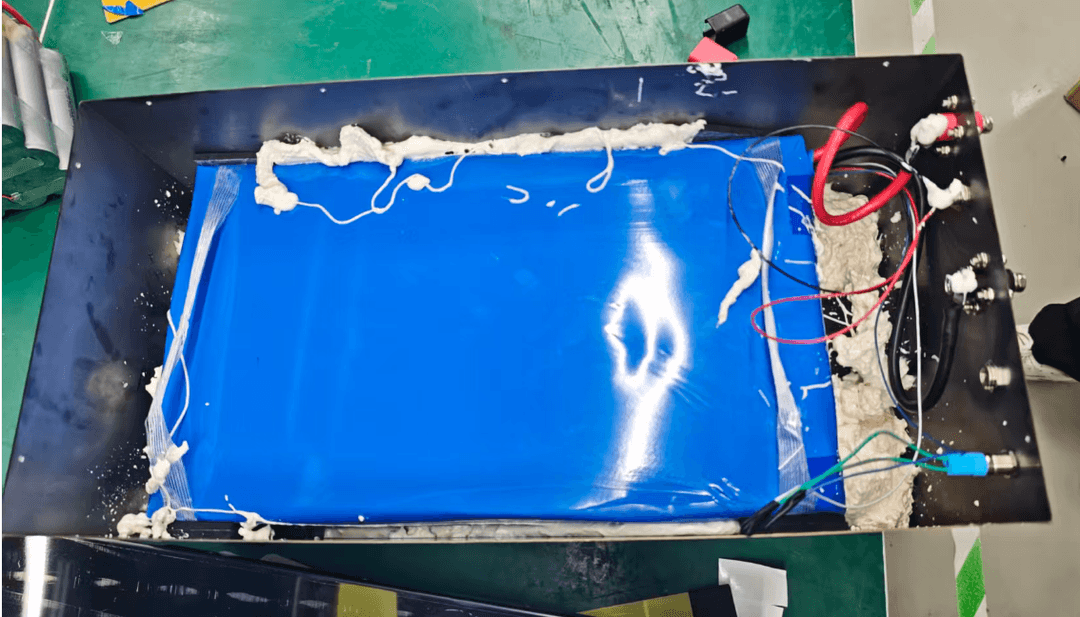
Budget Tab-Welded Battery
Cheap batteries use fragile tab-welded prismatic cells prone to swelling, vibration damage, and connection failures. Without individual cell protection, one bad cell can destroy the entire battery pack, leading to premature failure and safety risks.
These designs prioritize low manufacturing costs over durability, resulting in batteries that fail within 500-800 cycles under real-world conditions.
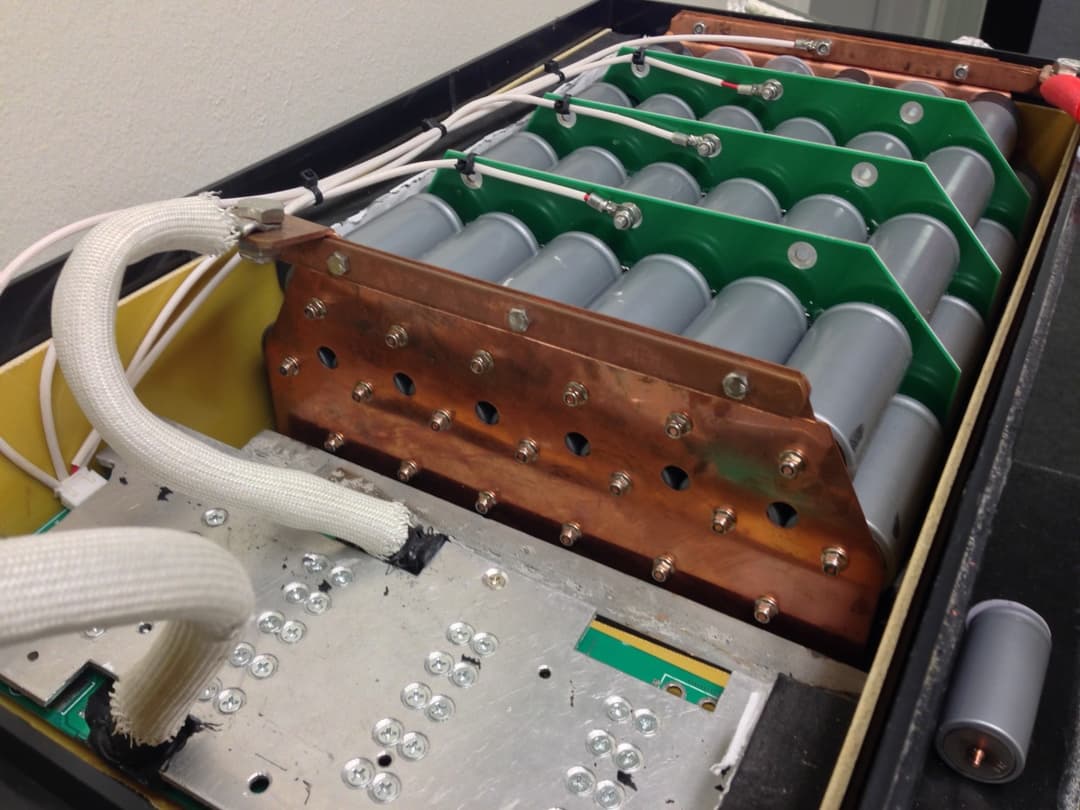
ChargeX Bolted Cylindrical Battery
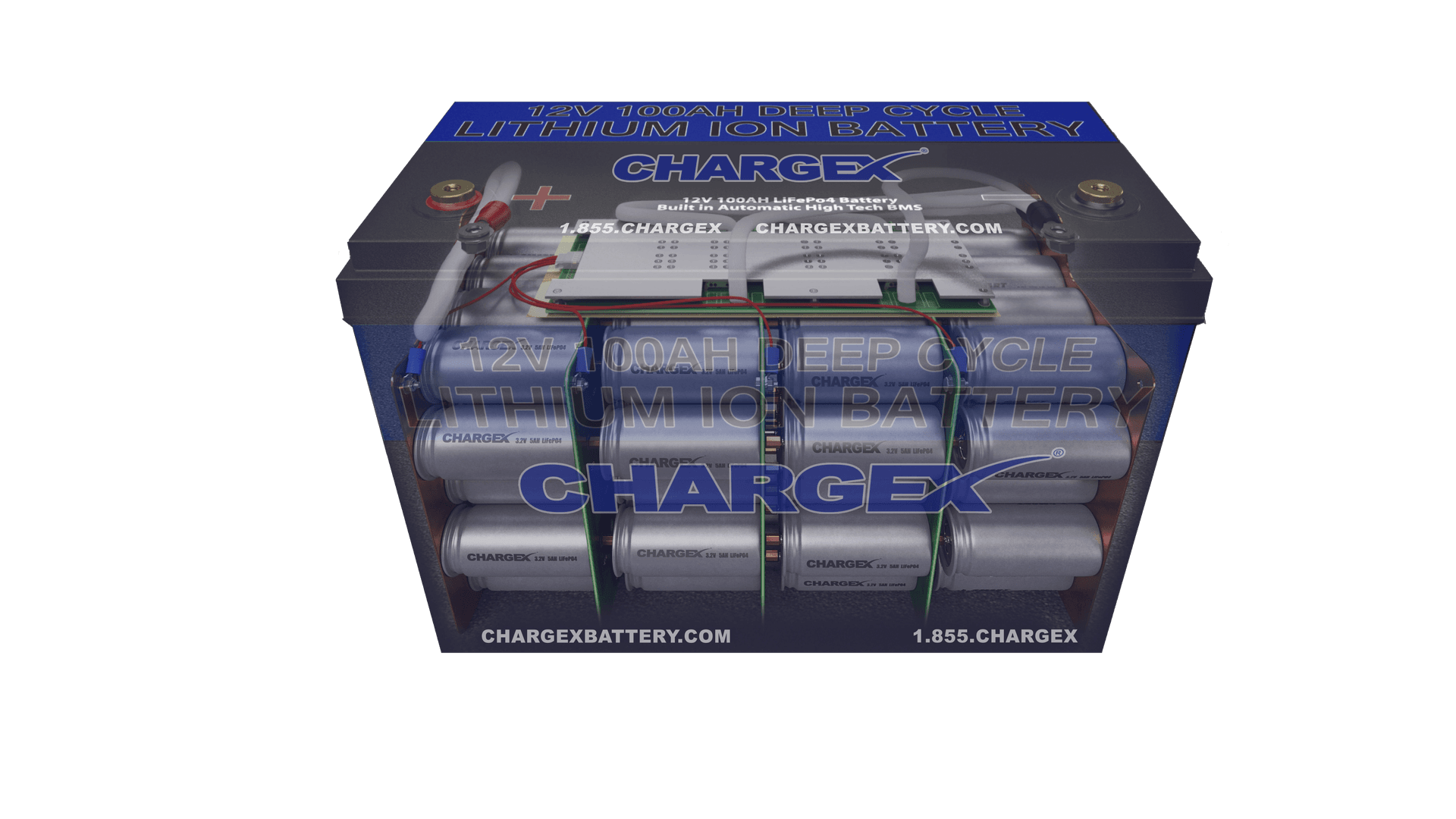
ChargeX batteries are engineered with premium bolted 32700 cylindrical cells, solid copper busbars, and individual Lengthway circuit boards for every cell. This rugged, fault-tolerant design provides superior vibration resistance, isolates any cell issues, and delivers unmatched safety, reliability, and a real 6,000+ cycle lifespan.
Military-grade construction and independent testing ensure ChargeX batteries perform reliably in extreme conditions where budget alternatives simply fail.
The Problem With Cheap Lithium Batteries
The lithium battery market has been flooded with low-cost options, many of which use design shortcuts that compromise safety, longevity, and real-world performance.
Prismatic Cells: Popular for a Reason, Problematic for Many
Prismatic cells have become the go-to choice for budget battery manufacturers because of one simple advantage: their flat, rectangular shape makes it easy to assemble four cells into a nominal 12V pack. The assembly looks clean, it is fast to build, and it keeps manufacturing costs low.
But that simplicity comes at a real price. Prismatic cells are large-format by design, which means a single cell failure has an outsized impact on the entire pack. Because cheap prismatic packs are often assembled with minimal cell-level protection, one bad cell can cascade into a complete pack failure. They also tend to swell under repeated heat cycling, and that swelling creates ongoing mechanical stress on the connections between cells.
Tab Welding: The Weakest Link in the Pack
The most telling sign of a cheaply built battery is how the cells are connected together. The most common method used by budget manufacturers is tab welding, a process where thin metal strips are spot-welded to cell terminals to form the electrical circuit of the pack.
Why Tab Welding Fails: Tab welds are inherently fragile. In environments with vibration such as marine decks, RV roads, off-road vehicles, and construction sites, those thin welded connections flex and fatigue over time. Eventually they crack or break apart entirely, leaving the battery dead even though the cells themselves may still be functional. A broken tab weld on a single cell can trigger a catastrophic short circuit that takes down the entire battery pack.
Cheap BMS Components Offer Limited Protection
A Battery Management System (BMS) is the brain of any lithium pack. It monitors cell voltages, balances charge across cells, and disconnects the battery under dangerous conditions. Budget batteries routinely cut costs here by using lower-grade MOSFETs and minimal circuitry. The result is a BMS that may not respond fast enough in an overcharge or short-circuit event and that typically cannot handle the high continuous current demands of engine-starting, bow thrusters, or other high-draw applications.
No Cell-Level Fault Isolation
In a cheap, tab-welded pack, if one cell fails, the failure propagates. There is no mechanism to isolate a bad cell and allow the remaining cells to carry on. The entire battery becomes useless, or worse, dangerous.
Inflated Capacity Ratings
To hit rock-bottom prices, many budget manufacturers use Grade-B or recycled cells that already have lower or inconsistent capacity, then skip critical quality-control steps such as proper cell matching, aging tests, and structural R&D.
The result is batteries that deliver dramatically less usable energy than the label claims. Independent testing of certain ultra-low-cost units has shown shocking shortfalls. For example, a battery advertised as 12Ah delivering only about 5Ah of actual usable capacity.
Side-by-Side Comparison
| Feature | Cheap Prismatic / Tab-Welded | ChargeX Bolted Cylindrical |
|---|---|---|
| Cell connection method | Tab welded, brittle under vibration | Bolted, mechanically rigid and secure |
| Cell type | Large-format prismatic, swells under cycling | 32700 stainless steel cylindrical, consistent and durable |
| Cell fault isolation | None, one failed cell kills the pack | Lengthway circuit boards isolate failed cells automatically |
| BMS quality | Budget MOSFETs, limited current handling | Premium MOSFETs, high charge/discharge current capability |
| Vibration resistance | Tab welds crack and fail over time | Bolted construction is vibration-proof |
| Short circuit protection | Pack-level only, slow or absent | Individual cell-level via circuit boards plus BMS |
| Cell safety features | Typically none beyond basic chemistry | Thermal fuse, high-pressure safety vent, flame-retardant electrolyte |
| Usable capacity | Often 50% of rated capacity | 108% depth of discharge without damaging the battery |
| Expected cycle life | 500 to 800 cycles under real conditions | 6,000+ cycles at 80% depth of discharge |
| Operating temperature range | Narrow range, performance degrades quickly | Certified -40°F to 140°F (MIL-STD-810G) |
| Warranty | 1 to 2 years typical | Life-time warranty (pro-rated after 5) backed by the "Never Experience Battery Failure Again" guarantee |
How ChargeX Batteries Are Built Differently
ChargeX engineers battery packs from the ground up to address every failure point that plagues cheap alternatives. The result is a battery that performs reliably in environments where lesser designs simply give up.
Bolted 32700 Stainless Steel Cylindrical Cells
Rather than relying on fragile tab welds, every ChargeX battery uses bolted construction. The cells are 32700-format, 3.2V LiFePO4 cylindrical units housed in explosion-proof stainless steel. They are physically bolted together through rigid Lengthway Circuit Boards. This mechanical connection is many times stronger than a spot weld and creates a far lower-resistance electrical pathway, which means more usable current and less heat generated during charge and discharge cycles.
Because the cells are cylindrical and mass-produced to high consistency standards, every cell in a ChargeX pack is closely matched for capacity and internal resistance. Matched cells balance better, age more uniformly, and deliver longer service life. The latest ChargeX cells are rated at 6.3Ah per cell with a lifespan exceeding 6,000 cycles.
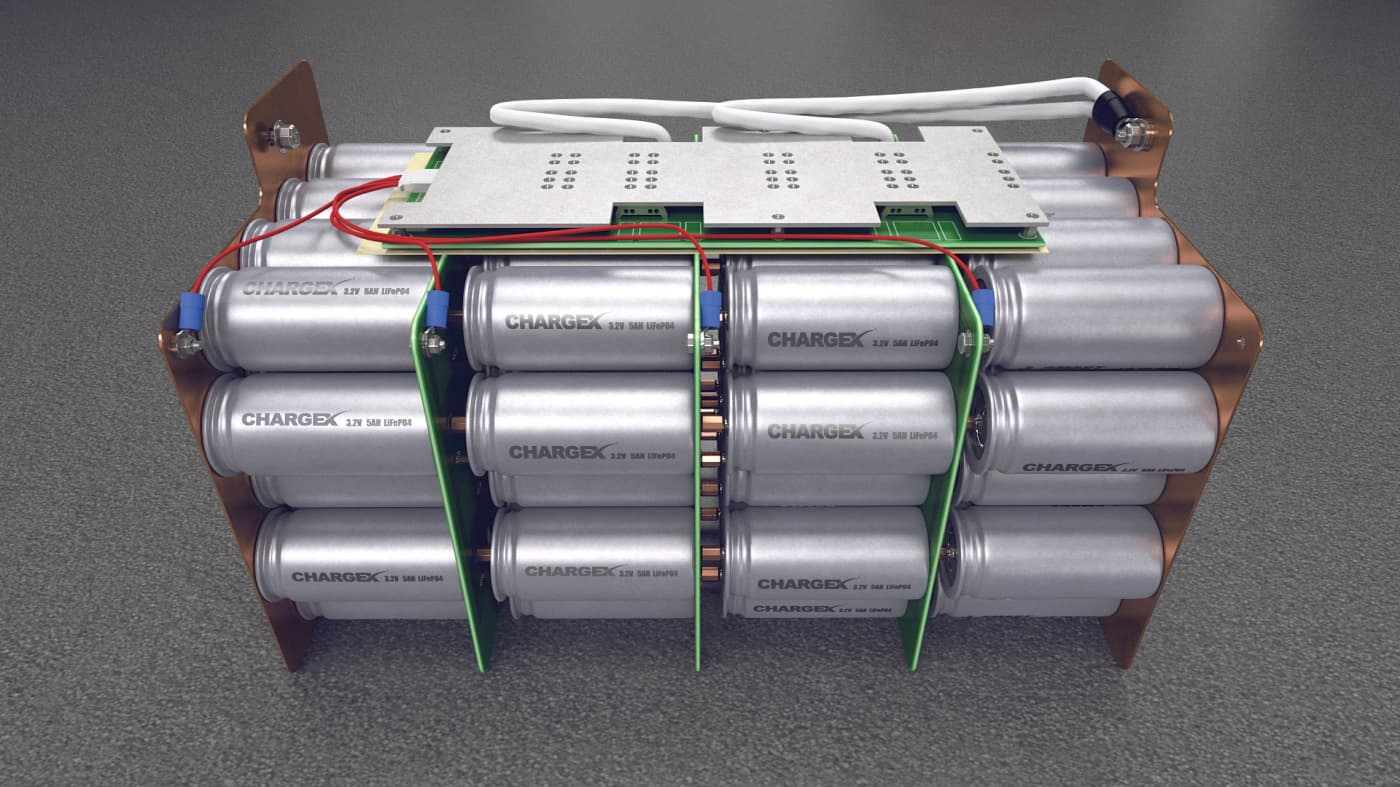
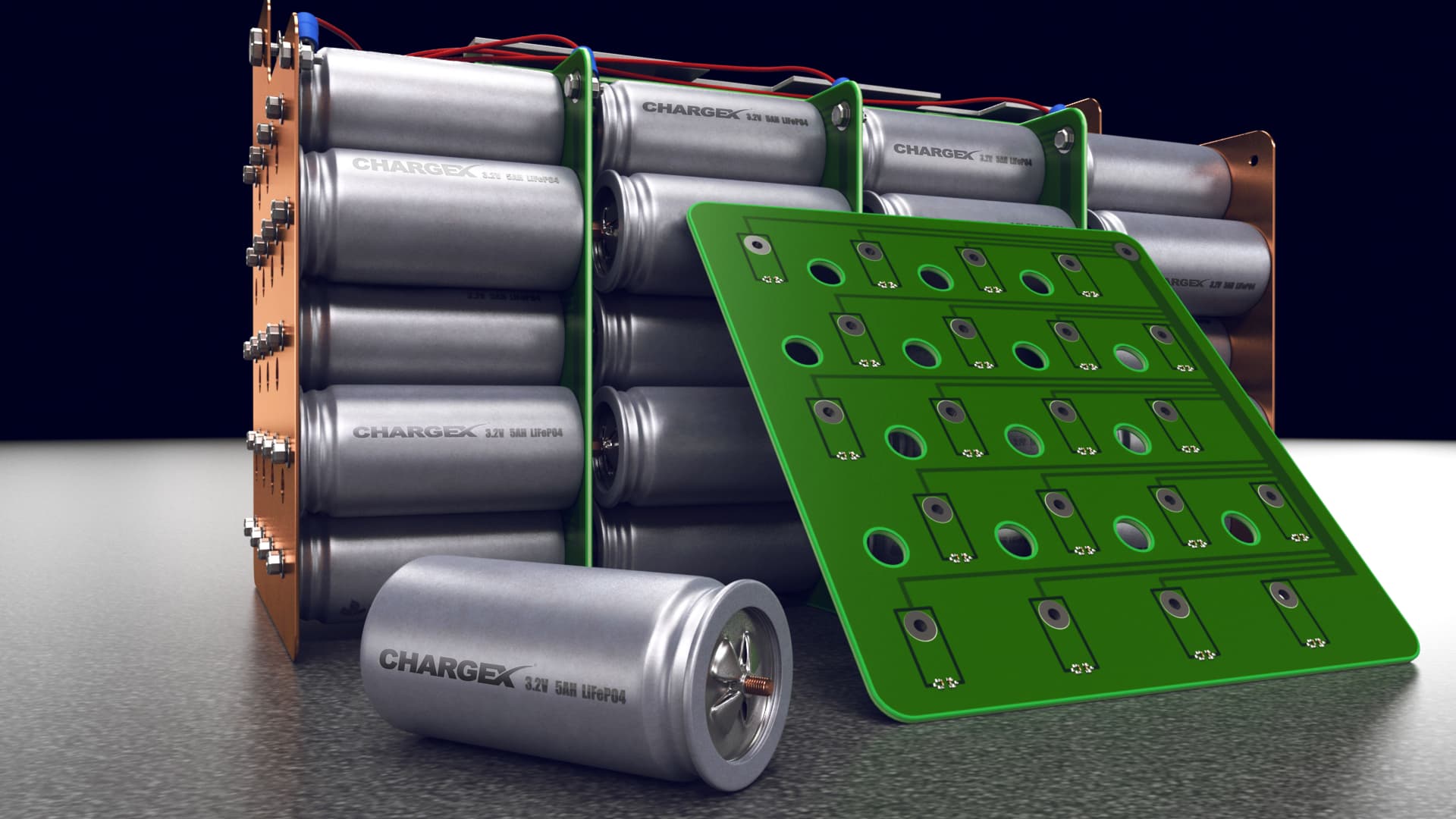
Lengthway Circuit Boards & Solid Copper Bus Plates
The Lengthway Circuit Boards integrated into each ChargeX pack serve two critical functions at once. Structurally, they hold the bolted cell array rigidly together as a single solid unit that resists vibration. Electrically, they work alongside the BMS to provide individual cell balancing and short-circuit protection for every cell in the pack.
If a cell ever fails, the circuit board automatically takes that cell offline, isolating the fault and allowing the rest of the battery to continue functioning normally at 12V with only a minor reduction in capacity. In a tab-welded design, the same event would result in a dead or dangerous battery.
ChargeX uses solid copper bus plates to carry current between cell groups. Copper is the optimal conductor for this role. Using solid plates rather than thin foil or braided strips ensures the connections resist bending, warping, and corrosion even under extreme temperature swings and continuous high-current demand.
Four Layers of Cell-Level Safety Engineering
Each individual ChargeX cell is built with four independent safety mechanisms that most cheap cells simply omit: thermal fuse, high-pressure safety vent, flame-retardant electrolyte, and explosion-proof stainless steel housing.
A Premium BMS Built for Real-World Demands
The ChargeX Battery Management System uses top-tier MOSFETs and high-quality electrical components selected for maximum efficiency, performance, and long-term reliability. The ChargeX BMS supports higher charge and discharge currents than competitors of the same rated capacity. The BMS provides instantaneous autonomous shutdown under over-voltage, low-voltage, reverse polarity, and short-circuit conditions. ChargeX batteries charge at 99.1% efficiency and can reach a full charge from zero in as little as one hour.
.jpg&w=1920&q=75&dpl=dpl_9Hb3qEWzTwu2rSkTbaaddgXJx1g3)
Military-Grade Certifications and Independent Testing
ChargeX batteries are not just claimed to be rugged. They are independently tested and certified to prove it. MIL-STD-810G certification means ChargeX batteries have passed rigorous testing for extreme temperature, shock, vibration, salt spray, and rapid pressure changes. They are rated to operate from -40°F all the way to 140°F, conditions that destroy most commercial-grade packs.
ChargeX has even subjected a 12V 600AH pack to a bulldozer test, running it over with heavy construction equipment, and the battery continued to perform without failure afterward.
This level of engineering and testing is why ChargeX batteries are trusted by organizations including NASA, SpaceX, Boeing, and the U.S. Navy for mission-critical applications.
The Real Cost of Going Cheap
A budget battery that fails after 18 months in a marine environment, on an RV, or in a solar storage system does not just cost the price of a replacement. It costs downtime, lost productivity, and potentially the loss of equipment or loads that depend on stable power. In military, aerospace, or commercial applications, a premature battery failure can have consequences far beyond the cost of the battery itself.
ChargeX batteries deliver 6,000 or more cycles at 80% depth of discharge. That is six to ten times the cycle life of a cheaply assembled prismatic pack rated at 500 to 800 cycles. Combined with zero maintenance requirements and a 10-year warranty, a ChargeX battery is consistently more cost-effective over its full lifetime than any budget alternative.
The bottom line: The price difference between a cheap tab-welded prismatic battery and a ChargeX bolted cylindrical pack reflects a genuine difference in materials, engineering, and expected lifespan.
Why ChargeX Is the Right Choice
ChargeX has spent over 16 years refining a lithium battery architecture that addresses every critical failure mode found in lesser designs.
Vibration-proof, used confidently in marine, automotive, aerospace, and military environments
Fault-tolerant, because individual cell failures do not take down the pack
High-current capable, handling starting and propulsion loads that overwhelm budget BMS systems
Intrinsically safe, with multiple cell-level safety features defending against thermal and electrical faults
Exceptionally long-lasting, rated for 5,000 or more cycles and backed by a 10-year warranty
Extreme-temperature rated and Waterproof, certified to operate from -40°F to 140°F per MIL-STD-810G, IP-67 rated
Drop-in ready, with the same group sizes as standard lead-acid batteries and no retrofitting required
Lifetime Warranty, in the extremely rare case a ChargeX battery fails, we'll repair or ship a brand new one (terms apply)
When quality, safety, and reliability matter, ChargeX delivers. To speak with a battery expert or find the right battery for your application, call 1-855-CHARGEX (1-855-242-7439), Monday through Friday.
Ready to Power Up?
Discover how ChargeX battery technology can power your next mission-critical application.